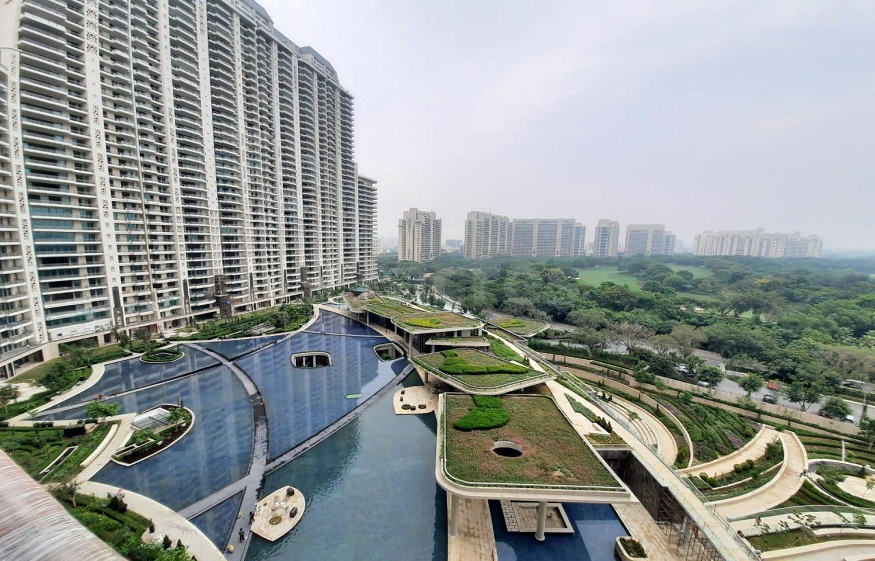

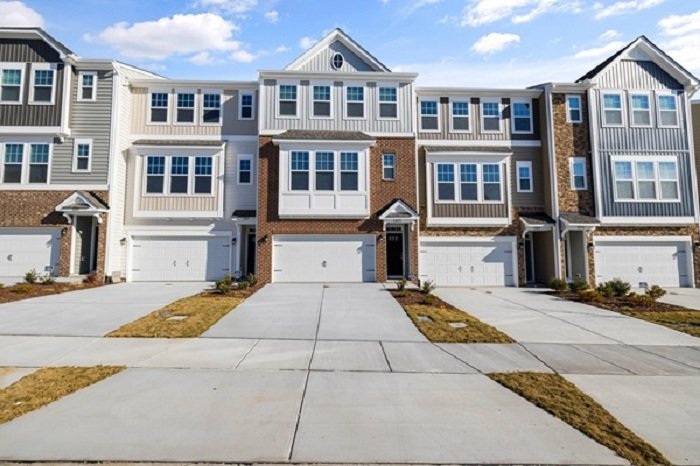
South East Queensland needs new homes, and it needs them quickly. For landowners and investors, that demand creates genuine opportunity, but it also raises a difficult early question: should the site be developed as townhouses or as apartments?
Neither option is better across the board. The right choice depends on the site’s size, zoning, location, and who is most likely to buy or rent the finished product. Townhouses tend to suit larger suburban lots in growth corridors, while apartments generally suit inner-city sites close to transport, services and employment. Understanding where your site sits on that spectrum is the first step towards a viable project.
What’s the Difference Between a Townhouse and an Apartment?
The difference between townhouse and apartment developments goes well beyond appearance. Each represents a distinct building type, with its own construction requirements, ownership structure and market.
| Feature | Townhouse | Apartment |
| Building form | Attached dwellings side by side, usually two to three storeys | Dwellings stacked vertically in a shared building |
| Building classification (NCC) | Typically Class 1a | Typically Class 2 |
| Land and access | Own ground-level entry, often a private yard and garage | Shared lobby, lifts, corridors and car park |
| Shared structure | Common walls between neighbours | Shared floors, ceilings, walls and services |
| Construction staging | Can often be built and sold in stages | Usually delivered as a single building |
In planning terms, both are typically assessed as a multiple dwelling where three or more dwellings are proposed. In practice, however, the townhouse vs apartment decision shapes almost everything that follows, from the design brief and build budget through to the end buyer.
How SEQ Population Growth Is Driving Demand for Medium Density Housing
SEQ population growth is the single biggest force behind the region’s housing pressure. The Queensland Government’s regional plan, ShapingSEQ, projects the region will reach around six million people by 2046, requiring almost 900,000 new homes.
Detached houses on greenfield lots can’t meet that demand alone. Land is finite, infrastructure is costly to extend, and many households look for something between a large family home and a high-rise unit. That gap is where townhouses, terraces and low-rise apartment buildings play an increasingly important role.
The type of density matters, too. Buyer and community preferences vary considerably from one location to the next, and the demand for high-rise vs low-rise housing differs markedly between coastal centres, established suburbs and emerging growth areas.
Townhouse vs Apartment Development: Comparing Build Costs, Yield and Buyer Demand
Any townhouse and apartment comparison comes down to three variables. Choosing a townhouse or apartment development means balancing what it costs to build, how many dwellings the site can yield, and who will buy them.
Build costs
- Townhouses are generally simpler to construct. They rarely need lifts, basements or complex fire separation between floors.
- Apartments involve more complex structural, fire, acoustic and services requirements, and lifts become necessary as buildings get taller. These typically increase the cost per square metre.
Yield
- Townhouses deliver fewer dwellings on a given site, because each one occupies its own footprint at ground level.
- Apartments can achieve substantially higher yields on the same land by building upwards, where zoning and height limits allow.
Buyer demand
- Townhouses appeal strongly to families, downsizers who still want a courtyard, and owner-occupiers seeking more space without a large yard.
- Apartments attract first-home buyers, investors, students, key workers and those who prioritise proximity to transport, jobs and amenities.
Finance and risk
- Townhouse projects can often be staged, so early sales help fund later stages.
- Apartment projects are usually built in one go, and lenders commonly require a level of presales before construction finance is approved.
When a Townhouse Development Makes More Sense
A townhouse development is often the stronger choice when:
- The site is a larger suburban lot, particularly in a growth corridor where land values are moderate.
- Zoning and height limits favour two to three storeys rather than mid-rise or high-rise buildings.
- The local buyer market is dominated by families and owner-occupiers who value private outdoor space and a garage.
- The developer prefers lower risk, with the option of staging construction and sales.
These are the conditions where medium density housing in townhouse form performs best. Tactica Planning & Development has secured approvals for exactly this type of project, including impact assessable approvals for 4 townhouses in Runaway Bay and 8 units across two blocks in Pimpama.
Read More: From Desert Escapes to Mountain Views: Homes in Palm Desert, Fountain Valley & Big Bear
When an Apartment Development Makes More Sense
An apartment development generally becomes the better fit when:
- The site is in or near a centre, close to public transport, employment and services.
- Zoning permits greater height and density, making a higher yield achievable.
- Land values are high, so spreading the land cost across more dwellings is essential for feasibility.
- The target market includes first-home buyers, investors, downsizers and renters who prioritise location over space.
Smaller-format dwellings can also open the door to affordable inner-city living. Tactica has secured approval for 8 micro dwellings in Southport, demonstrating how compact housing can work on well-located sites.
Success at this end of the market depends heavily on design. Understanding what Gold Coast apartment buyers want, from layouts and storage to balconies and parking, helps ensure the finished project sells.
Is a Townhouse a Good Investment?
Whether you’re developing to sell or to hold, it’s natural to ask: is a townhouse a good investment compared to an apartment? The answer depends on your strategy, but several factors commonly influence the comparison:
- Land content: Townhouses usually carry a larger share of land per dwelling, which many investors associate with stronger long-term capital growth.
- Scarcity: In established suburbs, well-designed townhouses can be in shorter supply than apartments.
- Holding costs: Townhouses often have lower body corporate fees, as there are fewer shared facilities such as lifts and pools to maintain.
- Rental demand: Apartments in well-connected locations can attract strong, consistent rental demand from tenants who prioritise convenience.
- Entry price: Apartments generally offer a lower purchase price, which broadens the pool of potential buyers.
For developers, the better question is often which product the local market is short of. Choosing a format that matches unmet demand in your area is usually more important than the building type itself. As with any investment decision, it’s worth seeking independent financial advice alongside planning advice.
Get Early Planning Advice Before Choosing Your Development Type
The most expensive mistake in medium density development is committing to a building type before confirming what the site can realistically support. Zoning, density mapping, height limits, overlays and parking requirements can all rule out an option, or make it far less profitable than expected.
Specialist advice on multiple dwelling town planning in Queensland at the outset clarifies the achievable yield, the likely category of assessment and the key constraints before you invest in design.
If you’re leaning towards townhouses, it’s also worth understanding the first steps before starting a townhouse development, from site due diligence to assembling your project team.
Tactica Planning & Development has secured approvals at both ends of the medium density spectrum, from suburban townhouses to inner-city micro dwellings. To discuss what your site can support, call 07 5677 0505 or get in touch to arrange an early planning review.
Townhouses vs Apartments FAQs
Which is more profitable to develop, townhouses or apartments? It depends on the site. Apartments can generate more dwellings on well-located land, while townhouses often carry lower construction costs and less risk on suburban sites.
Which is cheaper to build, townhouses or apartments? Townhouses are generally cheaper to build per square metre, as they rarely need lifts, basements or complex fire and acoustic separation between floors.
How much land do you need to build townhouses in Queensland? There’s no single minimum, as it depends on the local council’s planning scheme, the zone and the density mapping for the site. A planner can confirm the achievable number of dwellings on your lot.
Do townhouses hold their value better than apartments? Townhouses often have a higher land content per dwelling, which many investors associate with stronger capital growth, although location and quality remain the biggest factors.
Read More: DSCR Loans: Unlocking Real Estate Financing Without Income Proof
Do you need town planning approval to build townhouses in Queensland? In most cases, yes. A townhouse development is typically a multi-dwelling development and requires a development application, although the level of assessment depends on the zone and site.